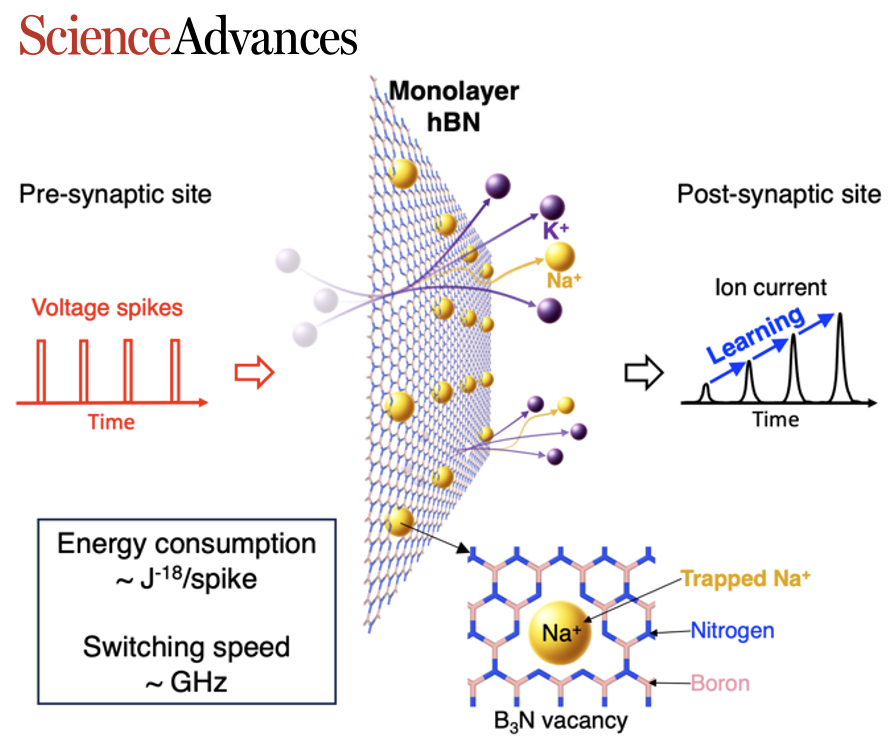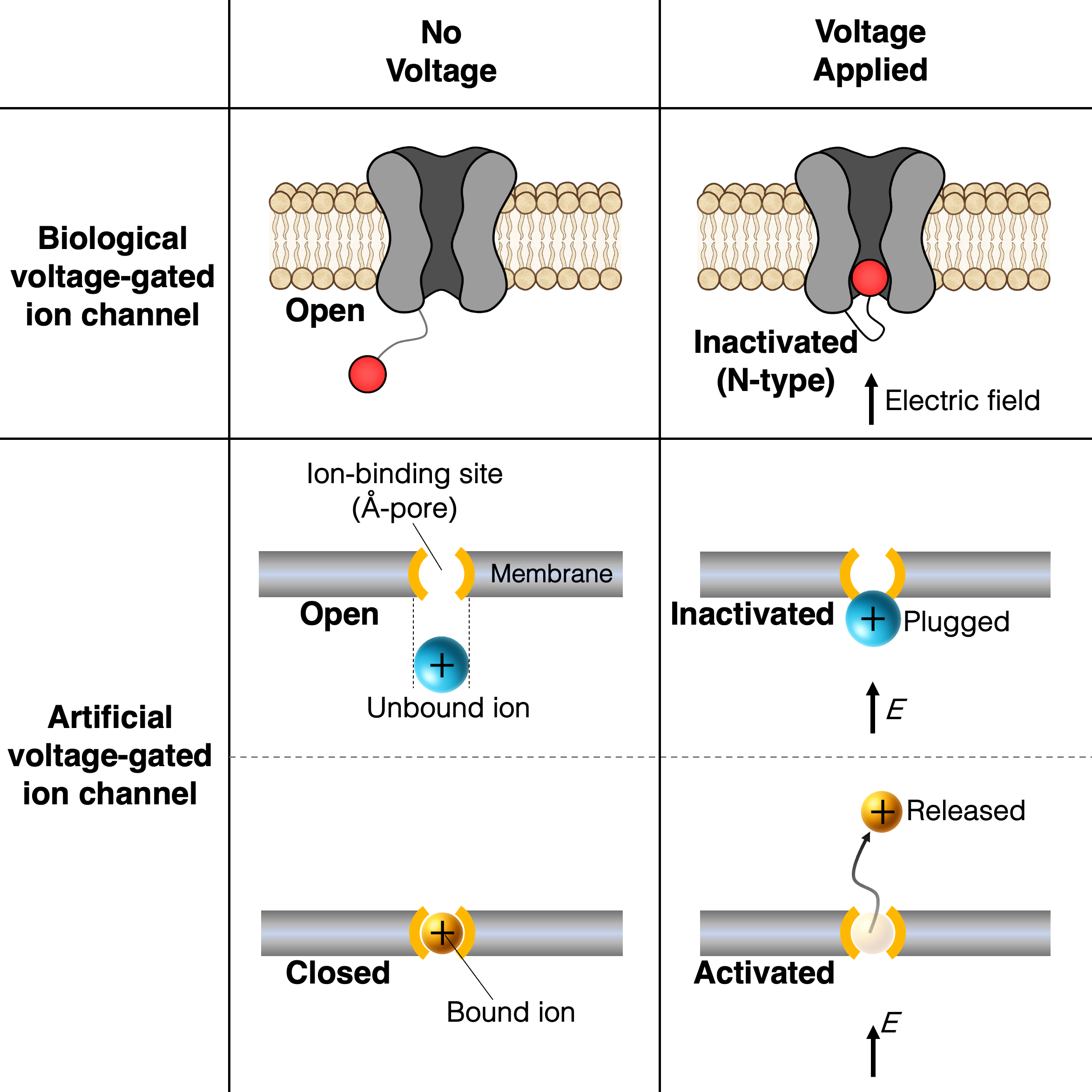
This study addresses a fundamental question in electrochemical neuromorphic computing: How can the brain’s molecular-level principles be effectively implemented in artificial ne...
This study addresses a fundamental question in electrochemical neuromorphic computing: How can the brain’s molecular-level principles be effectively implemented in artificial neuromorphic devices? Traditional transistor-based solid-state computing relies on electron-mediated signaling, whereas biological systems use ion signaling and achieve intelligence with remarkable energy efficiency. Historically, liquid-state ionic devices have received limited attention in the context of logic operations due to the overwhelming dominance of solid-state electronics. However, the recent success of large-scale AI—and growing concerns about energy sustainability—have renewed interest in the direct implementation of the brain’s energy-efficient iontronic mechanisms on liquid-state ionic platforms. This work presents how to leverage the unique electrochemical diversity of iontronics in achieving new ionic functions.