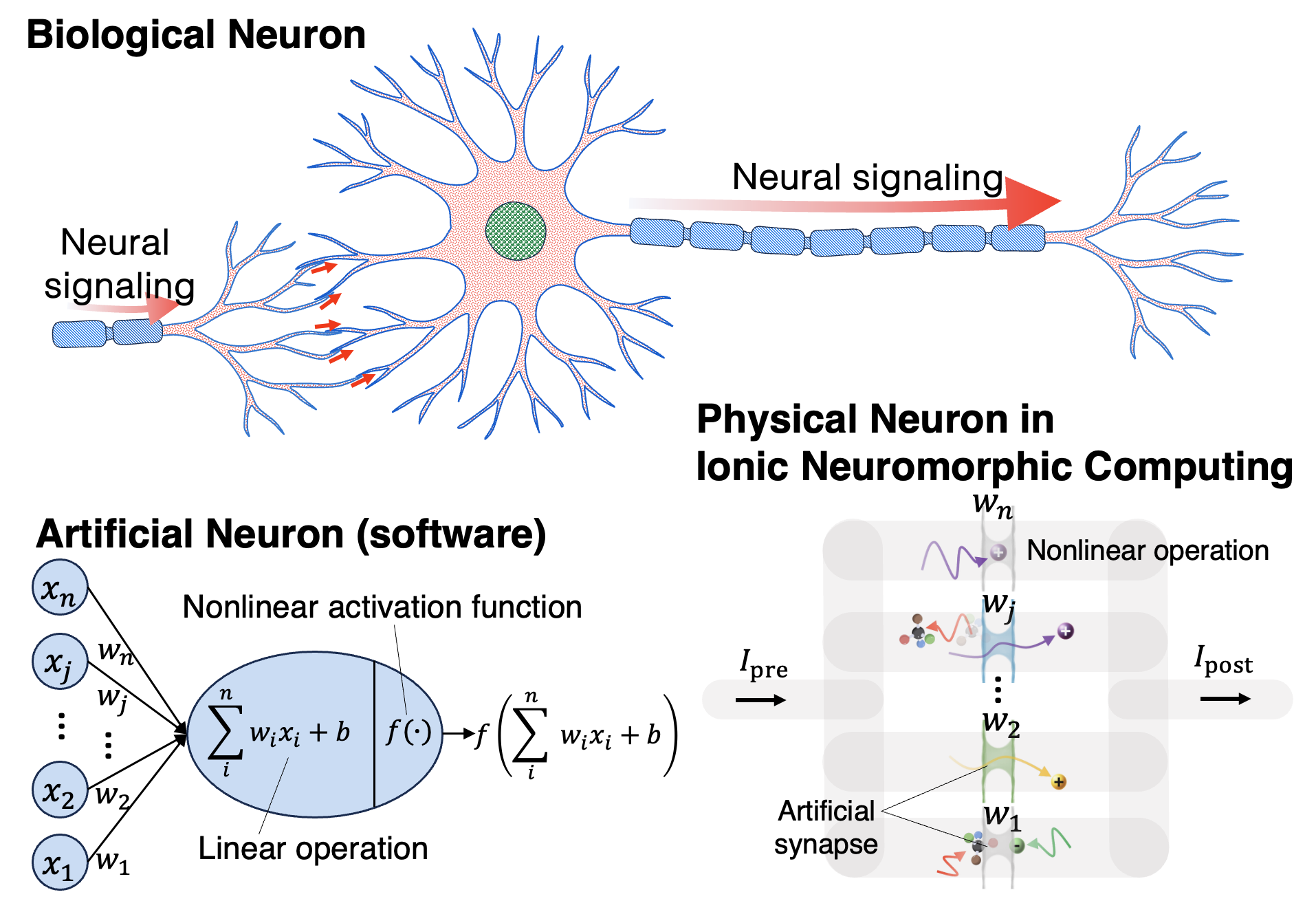
Ionic Memory and Computing
A 2026 reference scenario projects that data centers could consume nearly 12% of U.S. electricity by 2030. The human brain operates on roughly 20 watts. (Smith et al., 2026; Levy & Calvert, 2021).
This research examines how ionic materials process, retain, and transmit information, toward principles for energy-efficient computing.
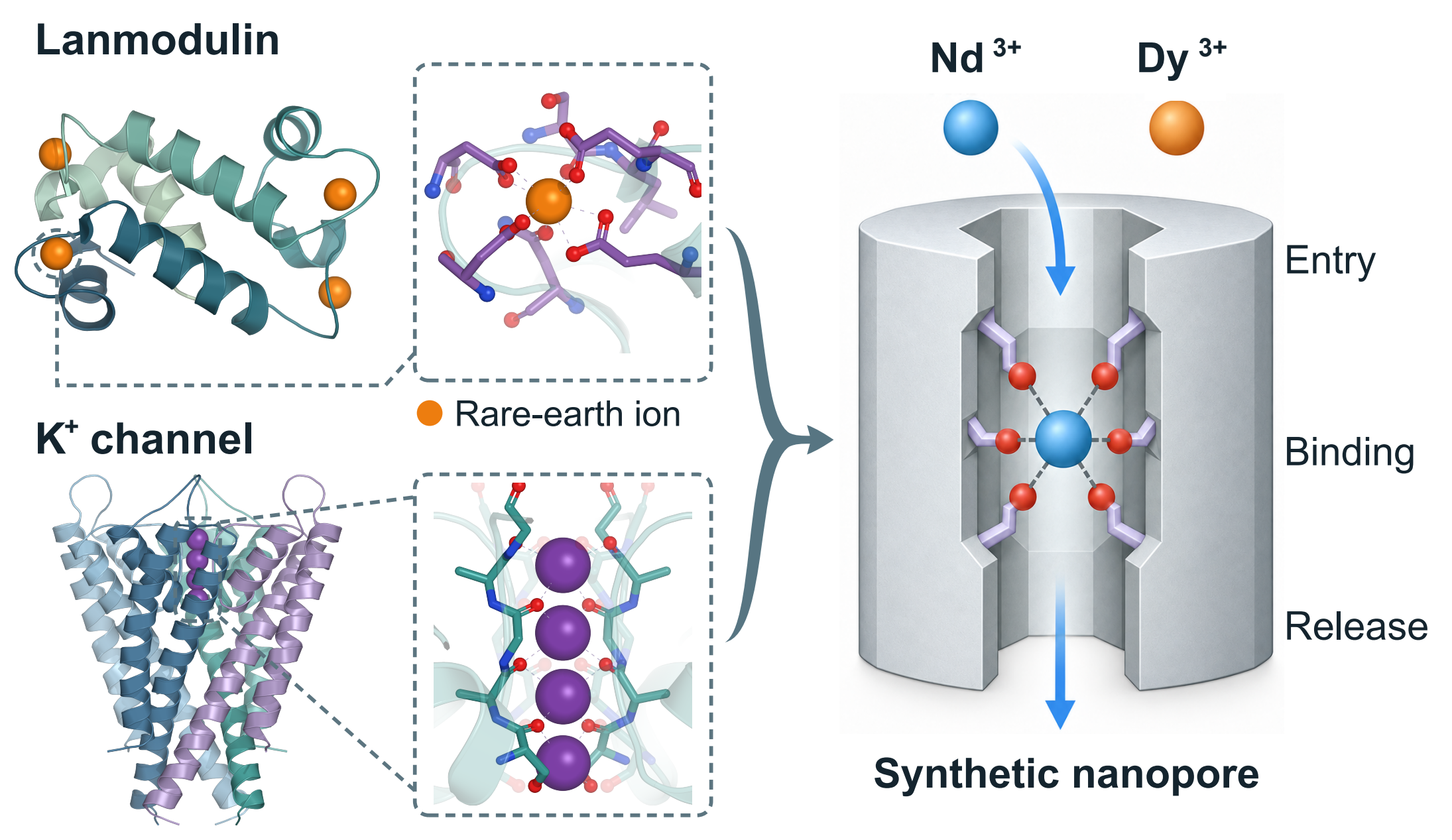
Selective Ion Transport
In 2024, 91% of the world’s refined magnet rare earths came from a single country. Their chemical similarity makes separation difficult, limiting routes to more resilient supply chains. (IEA, 2026).
This research examines the molecular basis of selective transport, with the goal of separating valuable elements using fewer resources and generating less waste.
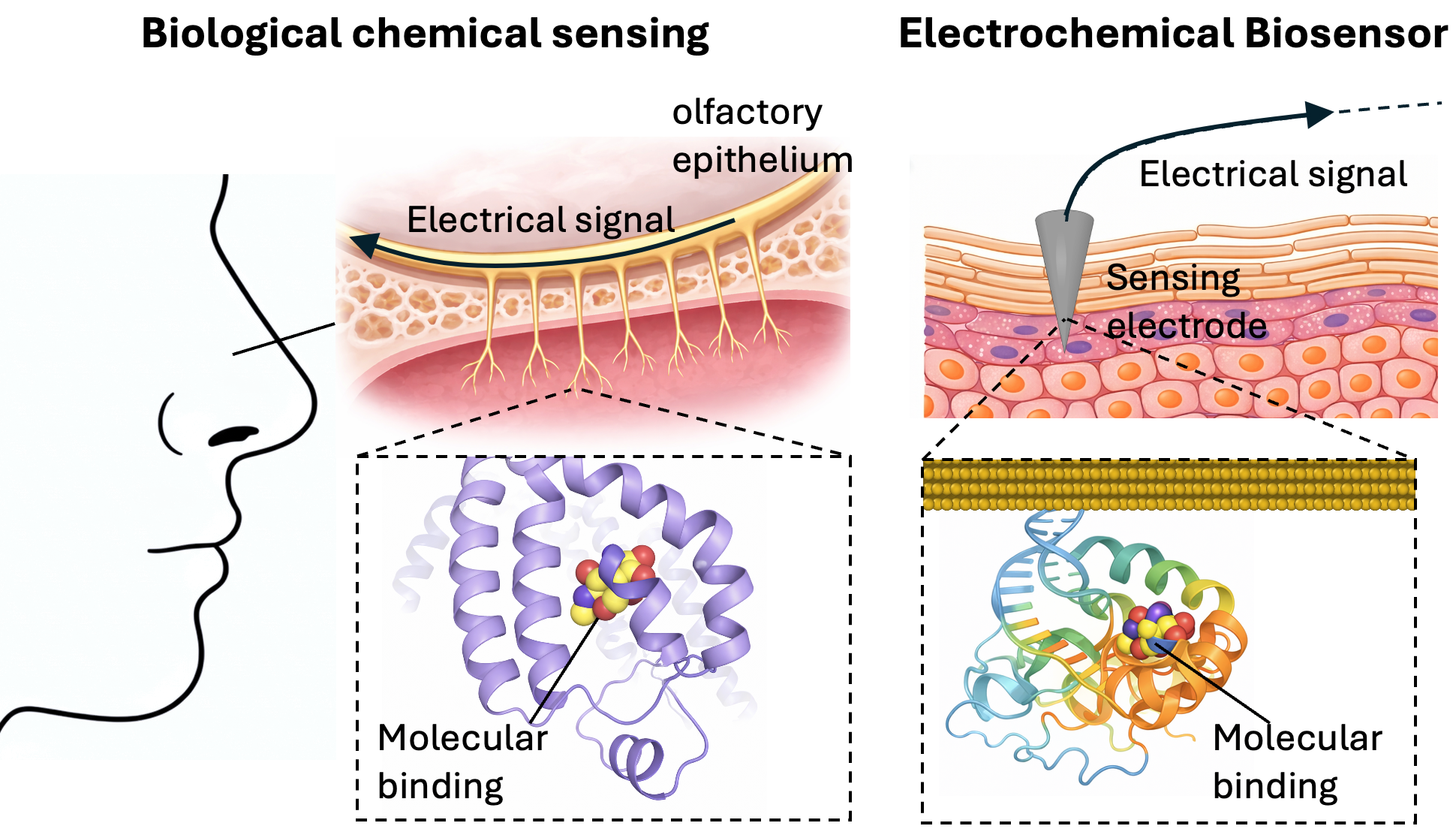
Interfacial Molecular Recognition
A 2021 Lancet Commission estimated that 47% of the world’s population had little or no access to diagnostics. Continuous glucose monitors demonstrate the value of molecular measurements beyond the laboratory. (Fleming et al., 2021).
This research studies molecular recognition at interfaces to extend continuous sensing beyond glucose and make molecular measurements more accessible.
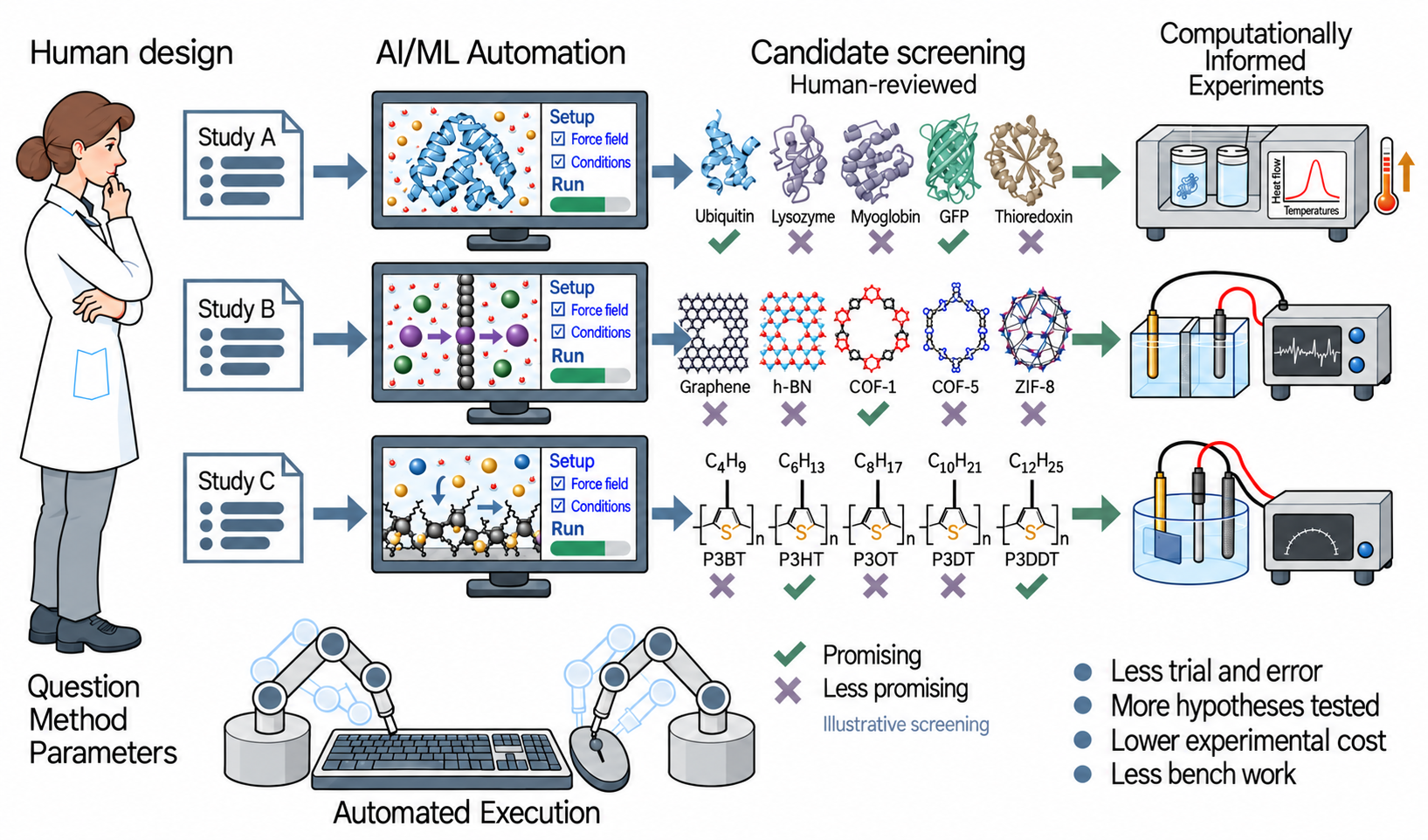
AI/ML Automation
In a survey of 1,972 scientists, respondents reported spending, on average, 30% of their working time developing scientific software and 40% using it (Hannay et al., 2009).
This research aims to reduce the hands-on workload of molecular simulation through AI-assisted automation, while keeping scientific judgment with the researcher.